


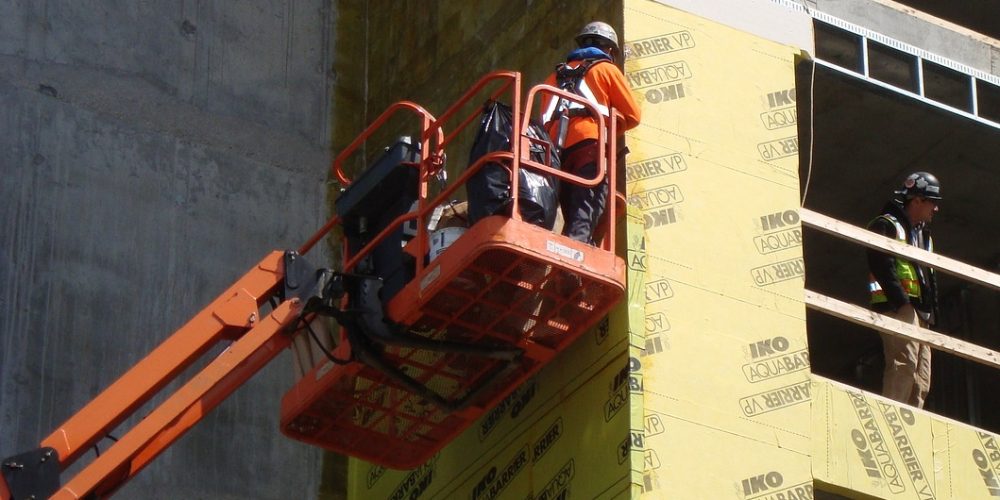
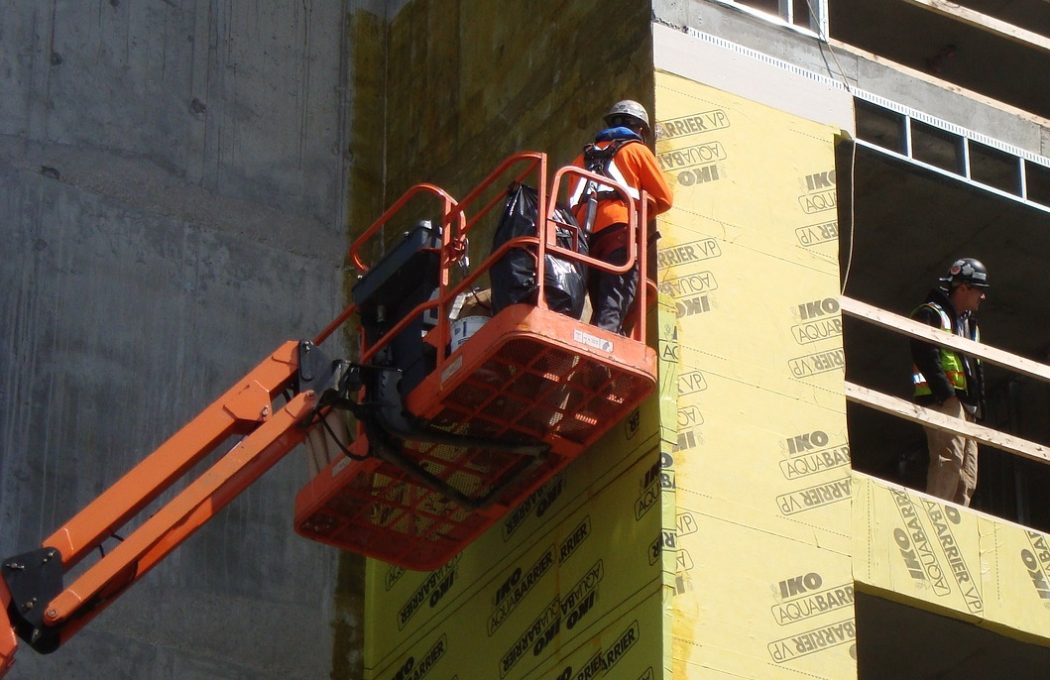
Job sites are not always at ground level. Sometimes, workers need to use aerial work platforms to reach their work. In this case, the risk of falling and the hazard of dropping objects on coworkers below is concrete. It’s crucial to implement multi-sensor based intrusion detection to ensure the safety of aerial work platforms. Moreover, pedestrians may also be present in the area where the vehicle is operating, so it’s essential to consider multi-sensor based intrusion detection for Aerial Work Platforms. Therefore, potentially dangerous interference between pedestrians and machine operations needs to be considered.
This project was funded by an industrial partner who wanted to create safe environments for workers operating above aerial platforms, and people working below. Therefore, they emphasized the importance of multi-sensor based intrusion detection for these platforms to enhance safety.
The project spanned over 9 months. It delivered a complete AI-based monitoring and alerting solution to improve the safety of human operators through multi-sensor, specially designed for aerial work platforms. Indeed, the project highlights multi-sensor based intrusion detection for Aerial Work Platforms within a short span of 9 months.
The solution comprised a stereo camera paired with custom algorithms for people and object recognition. Additionally, it included a rugged tablet available for the operator. In the specific use case, two systems were integrated into the aerial work platform, one in front and the other on the back. This setup was to monitor a big portion of the area surrounding the vehicle. Clearly, this setup highlights the multi-sensor based intrusion detection for aerial work platforms.

Images acquired by the stereo cameras are fed into the AI-based vision systems and processed at runtime to produce the 3D point clouds. Thousands of points are then grouped through smart clustering algorithms. Finally, the virtualized objects in space are created. All the objects out of a threshold distance are ignored since they are far from the working area. Therefore, they are subject to no risk. Objects that are close to the vehicle are classified with increasing levels of risk depending on the distance. In this case, both an acoustic and a visual signal are sent to the worker. The signals are given through the graphic interface running on the tablet as part of the multi-sensor for aerial work platforms.
Would you like to know more? Get in touch with us!

